rating: ★★★★
mark:
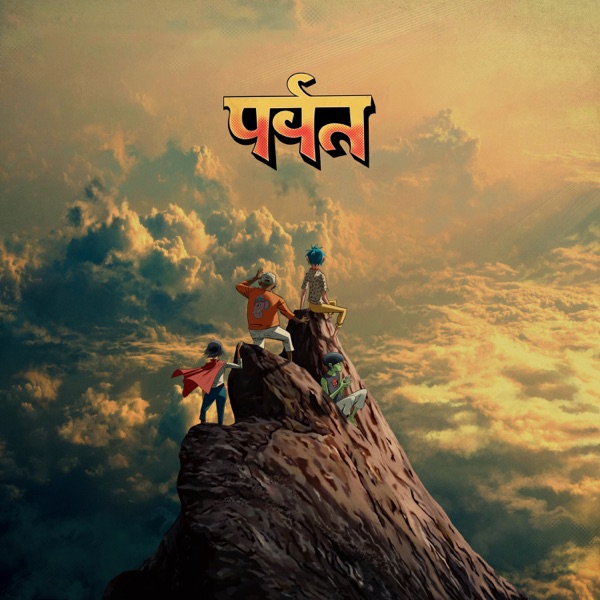
After traveling to India with Jamie Hewlett, his long-time creative partner from Gorillaz, in search of inspiration and experiencing the loss of a loved one during the journey, Damon Albarn recruited an Indian classical music ensemble for recording sessions. He also unearthed unreleased recordings from his archives featuring late collaborators, ultimately completing an album with a distinct sense of healing and spiritual reconstruction. As a key figure in British rock, he consciously shed the aura accumulated during his Blur era, using Gorillaz—a more open creative vehicle—to continue expressing his observations, experiences, and reflections. In doing so, he shifted from the role of an “author” to one closer to a “witness.”
Methodologically, he approached creation with a broader cultural perspective: transitioning from the meticulous craftsmanship of early British pop to the cross-cultural integration of world music today, demonstrating a sustained and credible desire for expression and adaptability. From the cool, critical social observations in The Magic Whip to the more inclusive and fluid cultural absorption seen now, his internal narrative has gradually shifted from outward to introspective, with a tone that has become gentler and more restrained, reflecting a deeper and calmer contemplation of life, aging, illness, and death.
In terms of the music itself, its strengths are relatively straightforward: it reconstructs Indian musical vocabulary within a pop context, achieving a natural overall fusion. The flute timbre serves as a recurring motif, maintaining a cohesive auditory framework. However, issues are also present. Albarn’s vocal delivery inevitably shows signs of decline, leading to heavy reliance on processing techniques (such as filtering and other effects) to preserve texture, which can become fatiguing over extended listening. Additionally, there is a certain degree of “filler” material in the middle to later sections of the album, which structurally weakens the overall narrative tightness.
Another humorous point worth mentioning is that I’ve seen some accuse Damon Albarn of cultural appropriation. Hah, when “cultural appropriation” becomes a readily available tool for accusation, we must also question whether this is simplifying complex cultural interactions through a victimhood narrative. If we assume that all cross-cultural behaviors inherently contain oppressive structures, do we not risk denying the possibility of equal collaboration between individuals?
在与 Gorillaz 的长期共创伙伴 Jamie Hewlett 一同前往印度寻找创作灵感、并在旅途中经历亲人离世之后,Damon Albarn 招募印度古典乐团参与录制,同时从档案中发掘已故合作者的未公开录音,最终完成了一张带有明显疗愈意味与精神重建气质的作品。作为英伦摇滚的重要代表人物,他有意识地剥离 Blur 时代所积累的光环,借助 Gorillaz 这一更具开放性的创作载体,继续表达自身的所见、所闻与所思,从“作者”转向更接近“见证者”的姿态。
在方法论上,他以更为宽阔的文化视野展开创作:从早期英伦流行内部的精细雕琢,过渡到当下对世界音乐的跨域整合,体现出持续而可信的表达欲与适应能力。从《The Magic Whip》中偏向冷静、批判性的社会观察,到如今趋于包容与流动的文化吸纳,其内在叙事逐渐由外向转为内省,语气也转向温和而克制,对生老病死的体察更显沉静。
就音乐本体而言,其优势相对直观:以印度音乐语汇为基础进行流行语境下的重构,整体融合较为自然,长笛音色作为贯穿性动机维持了统一的听感框架。然而问题同样存在。Albarn 的声线不可避免地出现衰退,因此大量依赖处理(如滤波等效果)来维持质感,长时间聆听后容易产生疲劳感;同时专辑中后段存在一定程度的“填充感”,在结构上削弱了整体叙述的紧凑性。
另外值得一提的一个幽默观点,我有看到有人指控Damon Albarn正在进行文化挪用。呵呵,当“文化挪用”成为一种随手可用的指控工具时,我们也需要警惕这是否正在用受害者叙事来简化复杂的文化互动?如果默认所有跨文化行为都内含压迫结构,我们是否反而否认了个体之间平等合作的可能性?